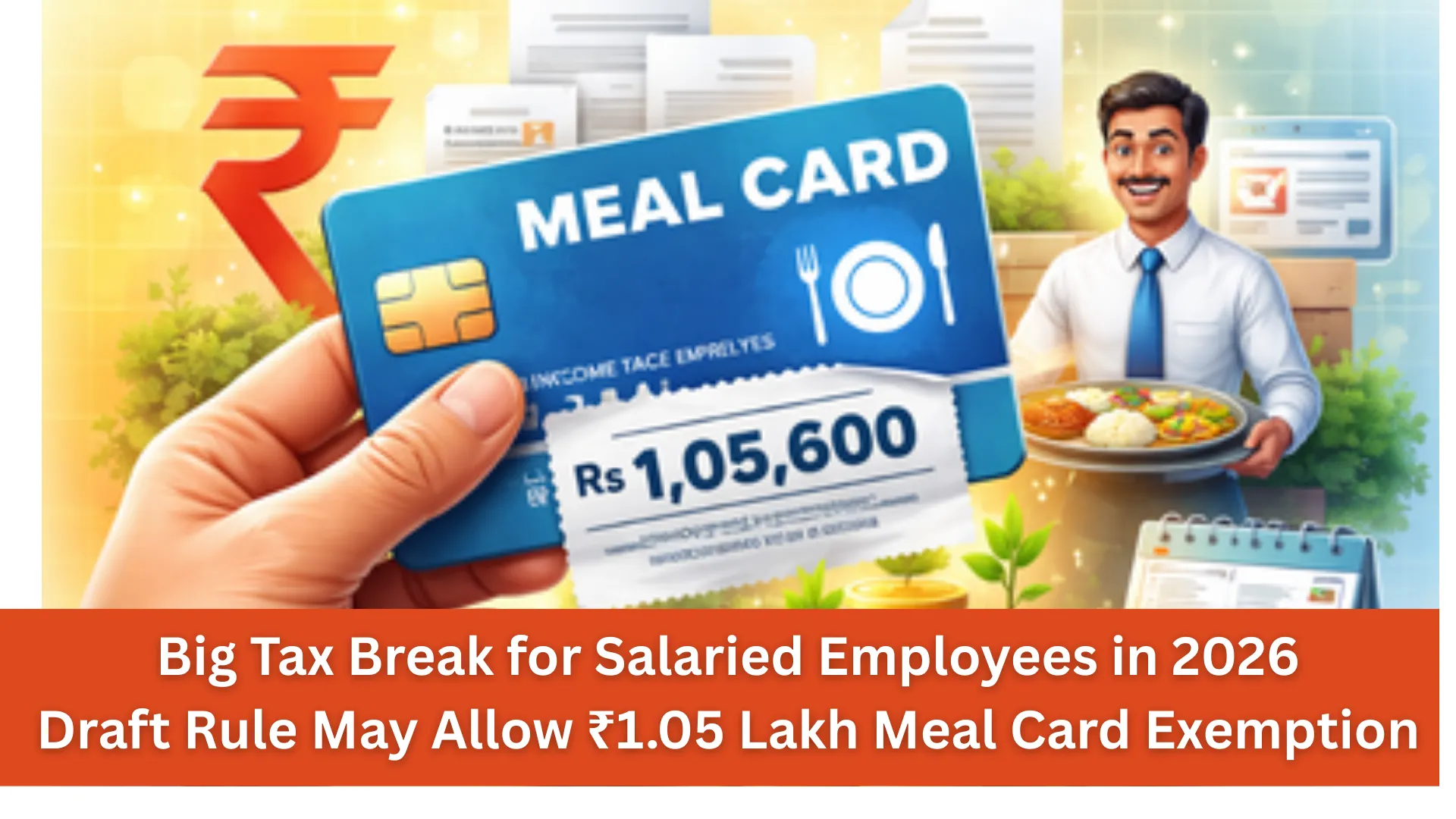
A major relief proposal is being discussed for salaried employees in 2026. Under new draft income tax rules, employees may soon be allowed to claim an exemption of up to ₹1.05 lakh annually on meal card benefits. If implemented, this change could significantly reduce the taxable income of millions of salaried individuals across the country.
The proposal is being considered under the broader framework of reforms linked to the Income Tax Department, which is reviewing employee benefits and tax exemptions to simplify the tax system and offer relief to middle class taxpayers.
What the Draft Rule Proposes
According to the draft proposal, salaried employees may be allowed to claim a higher exemption on meal card or food coupon benefits. Currently, meal card exemptions are limited to smaller amounts, but the new proposal could raise the total annual tax free benefit to ₹1.05 lakh.
This would allow employees to structure part of their salary as meal benefits and reduce their taxable income legally.
How Meal Card Exemption Works
Meal cards or food coupons are employer provided benefits used to purchase food and non alcoholic beverages. These are usually issued as prepaid cards or digital vouchers.
Under tax rules, a certain portion of these benefits is exempt from income tax, provided they are used for meals and meet the conditions set by the tax authorities.
Key Highlights of the Proposed Exemption
| Feature | Details |
|---|---|
| Proposed Exemption | Up to ₹1.05 lakh per year |
| Beneficiaries | Salaried employees |
| Benefit Type | Meal card or food coupon exemption |
| Tax Impact | Reduction in taxable income |
| Status | Draft proposal under consideration |
Potential Benefits for Salaried Employees
- Higher tax free allowance through meal cards
- Lower taxable salary and reduced tax burden
- More flexible salary structuring options
- Increased take home income
- Encouragement of digital and cashless food payments
Who Can Benefit from the Proposal
If approved, the new exemption will mainly benefit salaried employees who receive meal card or food coupon benefits as part of their compensation package. Employees in both private and public sector organizations may be able to use this exemption if their employer provides such benefits.
The actual benefit will depend on salary structure, tax regime selection, and employer policies.
How This Could Affect Tax Planning in 2026
Tax experts believe that increasing meal card exemptions could become a popular tax saving option for employees. Many companies may revise salary structures to include higher meal card components if the proposal is approved.
This change could also encourage digital payments for food expenses and reduce cash transactions.
When the New Rule May Come into Effect
Since the exemption is currently in draft stage, the final decision will depend on official announcements in the upcoming budget or tax notifications. If approved, it could come into effect in the financial year 2026 or later.
Employees are advised to wait for official confirmation before making any changes to their tax planning.
Conclusion
The proposed ₹1.05 lakh meal card exemption in 2026 could offer significant tax relief to salaried employees. By reducing taxable income and increasing take home pay, the draft rule has the potential to benefit millions of taxpayers. However, the final impact will depend on official approval and implementation details in upcoming tax announcements.
Disclaimer
This is based on draft proposals and may change after official government notifications.
FAQs
What is the proposed meal card tax exemption for 2026
The draft rule suggests an exemption of up to ₹1.05 lakh per year.
Who will benefit from this exemption
Salaried employees receiving meal card or food coupon benefits.
Is the new exemption confirmed
No, it is currently a draft proposal and awaits official approval.
Will this reduce taxable income
Yes, eligible meal card benefits can lower taxable salary.