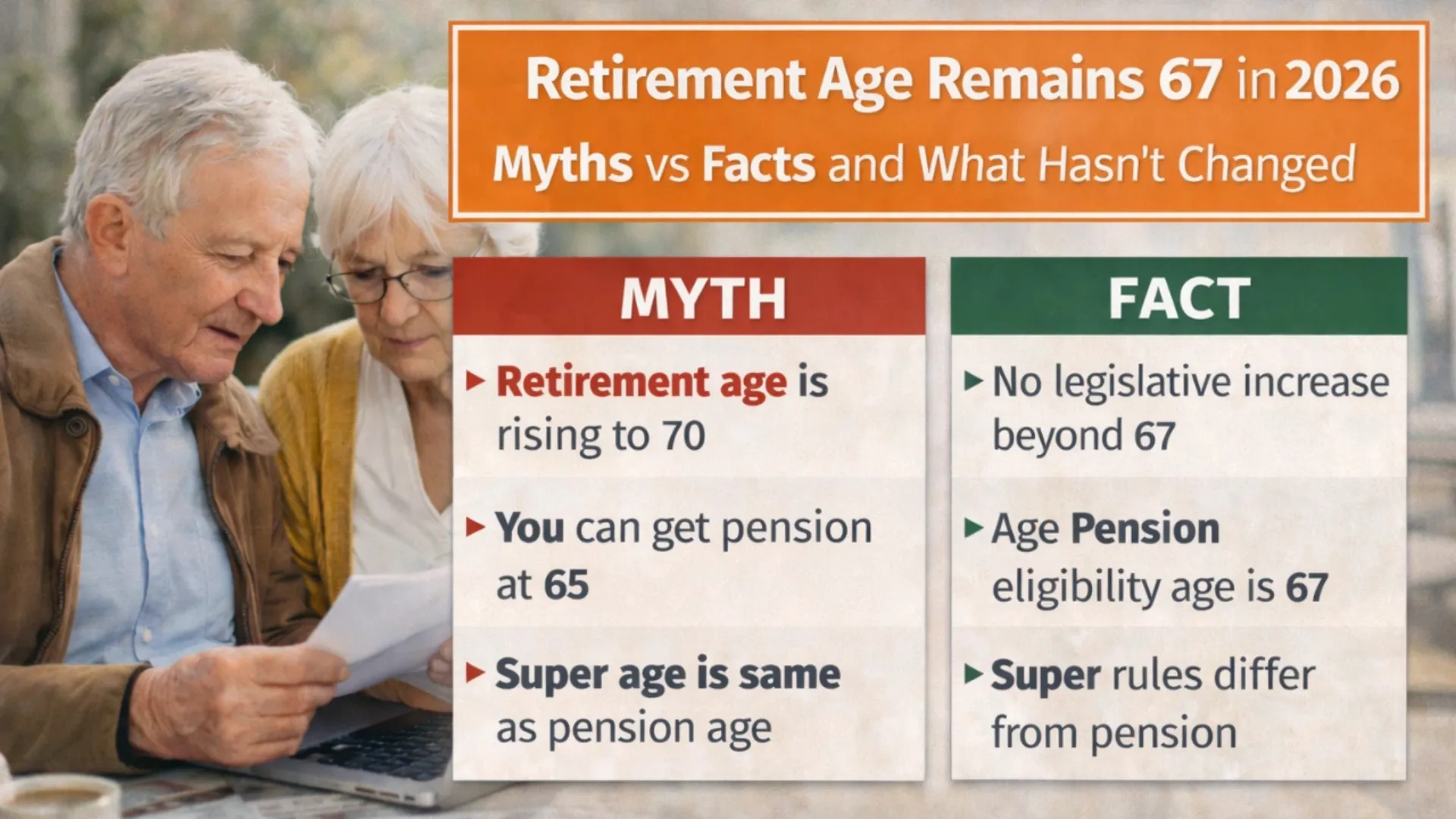
retirement age 67 2026 myths vs facts: Rumors about the retirement age increasing again in 2026 have been spreading quickly online. Many workers are worried that they may have to wait longer to claim full Social Security benefits. However, the facts tell a different story. In 2026, the full retirement age remains 67 for people born in 1960 or later. There is no new law raising it beyond that level this year.
Here is a clear breakdown of what has not changed, what still applies, and how the current retirement rules affect future retirees.
What Is the Full Retirement Age in 2026
The full retirement age is the age at which a person can receive 100 percent of their Social Security retirement benefit. In 2026, that age remains 67 for individuals born in 1960 or later.
This change was scheduled decades ago and has now fully phased in. There has been no new increase announced for 2026. Anyone reaching full retirement age this year will do so at 67, not 68 or 69 as some online posts suggest.
Why People Think the Retirement Age Is Increasing
Confusion often happens because earlier reforms gradually raised the retirement age from 65 to 67 over several years. Since that phase in process is now complete, some people mistakenly believe another increase is starting.
There are also policy discussions in Congress about the long term future of Social Security. However, discussions do not mean new laws have passed. As of 2026, the official full retirement age remains unchanged.
Retirement Age Rules by Birth Year
Here is how the current system works.
| Year of Birth | Full Retirement Age |
|---|---|
| 1958 | 66 and 8 months |
| 1959 | 66 and 10 months |
| 1960 or later | 67 |
This table confirms that anyone born in 1960 or after will reach full retirement age at 67. There is no additional step up in 2026.
Can You Still Retire Earlier Than 67
Yes, early retirement is still allowed. Individuals can start claiming Social Security benefits at age 62. However, claiming early permanently reduces the monthly payment.
For someone with a full retirement age of 67, claiming at 62 could reduce benefits by up to about 30 percent. This reduction lasts for life.
What Has Not Changed in 2026
Despite online rumors, several key rules remain exactly the same in 2026.
• Full retirement age remains 67 for those born in 1960 or later
• Early retirement option at 62 is still available
• Delayed retirement credits still increase benefits up to age 70
• Benefit reductions apply for early claims
• Spousal and survivor rules continue under current law
These unchanged rules are important for retirement planning.
Benefits of Delaying Retirement
While 67 is the full retirement age, individuals can delay claiming benefits until age 70. For each year of delay beyond full retirement age, monthly payments increase through delayed retirement credits.
Delaying from 67 to 70 can increase benefits by about 8 percent per year. This can result in significantly higher lifetime income for those who expect to live longer.
Earnings Limits Still Apply Before Full Retirement Age
If someone claims benefits before full retirement age and continues working, earnings limits still apply in 2026.
If income exceeds the annual threshold, benefits may be temporarily reduced. Once full retirement age is reached, these limits no longer apply.
This rule has not changed in 2026.
Cost of Living Adjustments Continue
Although the retirement age itself has not increased, benefit amounts may rise due to cost of living adjustments. These annual increases help payments keep up with inflation.
Retirees receiving Social Security in 2026 may see slight monthly increases depending on the official adjustment for the year.
Conclusion
The retirement age in 2026 remains 67 for people born in 1960 or later. There is no new increase this year, despite rumors suggesting otherwise. Early retirement at 62 is still available with reduced benefits, and delayed retirement up to 70 can increase monthly payments.
Understanding what has not changed is just as important as knowing what has. Workers planning for retirement should focus on confirmed rules rather than online speculation. Careful timing decisions can make a significant difference in long term financial security.
Disclaimer
This article is for informational purposes only and does not replace official government guidance or financial advice.
FAQs
Is the retirement age increasing in 2026
No, the full retirement age remains 67 for those born in 1960 or later.
Can I still retire at 62
Yes, but your monthly benefits will be permanently reduced.
What happens if I delay past 67
You can receive higher monthly payments through delayed retirement credits until age 70.
Does the earnings limit still apply in 2026
Yes, earnings limits apply if you claim benefits before reaching full retirement age.
Will Social Security payments increase in 2026
Payments may increase due to annual cost of living adjustments, but the retirement age itself has not changed.