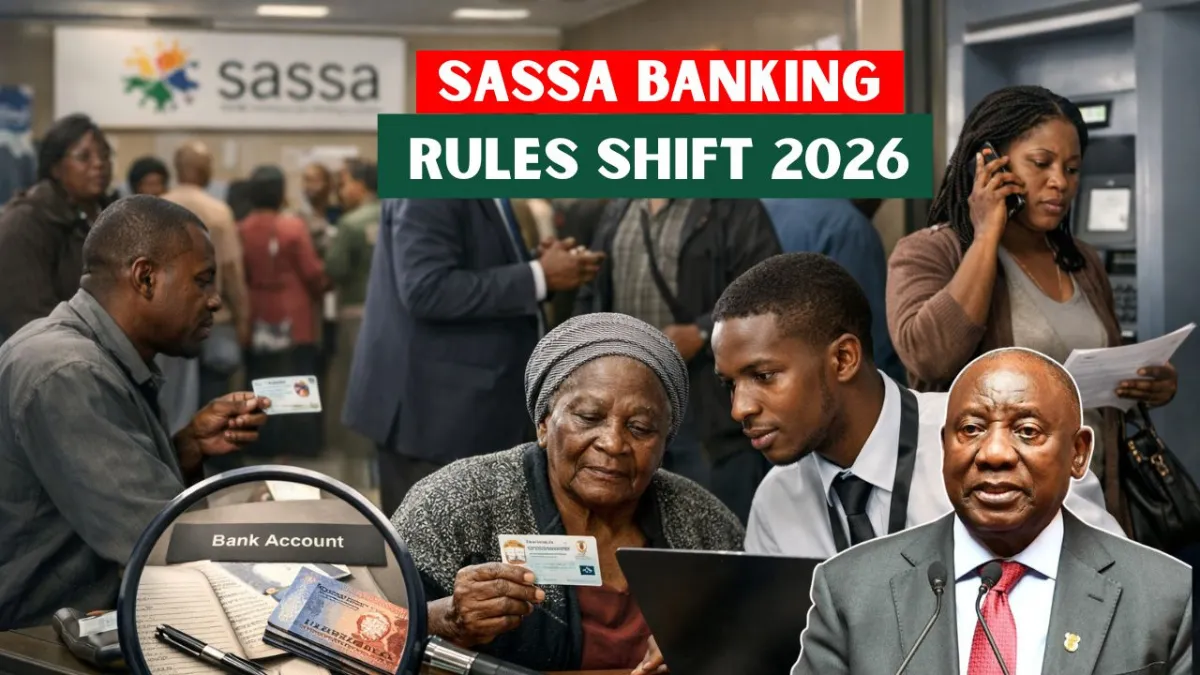
Millions of grant beneficiaries are being advised to review their banking details as new SASSA account verification rules are expected to take effect in 2026. These changes could affect how payments are processed and who continues to receive social grants without interruption. For households that depend on monthly assistance, understanding these new banking checks is essential to avoid delays or suspended payments.
Overview of the 2026 SASSA Banking Rule Changes
SASSA is preparing to introduce stricter banking verification measures to ensure that grant payments go to the correct recipients. The goal of the new system is to reduce fraud, prevent duplicate accounts, and confirm that beneficiaries still meet financial eligibility rules.
Under the new approach, the agency may perform regular checks on bank accounts linked to grant payments. If any inconsistencies are found, the payment could be delayed until the issue is resolved.
Key Highlights of the New Banking Rules
- Mandatory bank account verification for selected beneficiaries
- Automated checks to confirm account ownership
- Possible payment delays for unverified accounts
- Updated income checks linked to bank records
- Digital notifications for required updates
Important Timeline for the 2026 Changes
Authorities are expected to roll out the new banking rules in phases throughout 2026. This approach gives beneficiaries time to confirm their details and avoid payment disruptions.
| Phase | Timeline | What It Means |
|---|---|---|
| Awareness and Notifications | Early 2026 | Beneficiaries informed about new checks |
| Account Verification Begins | Mid-2026 | Bank details reviewed and matched |
| Payment Adjustments | Mid to Late 2026 | Unverified accounts may face delays |
| Full Implementation | End of 2026 | New banking rules fully active |
Who Will Be Affected by the Account Checks
The new rules are mainly aimed at beneficiaries whose bank details need verification. This may include people who recently changed bank accounts, those with mismatched personal details, or accounts flagged during income checks.
The changes may affect:
- New applicants linking bank accounts for the first time
- Beneficiaries who changed their banking details recently
- Accounts with inconsistent identity information
- Recipients flagged during income or eligibility reviews
Beneficiaries with correct and verified banking details are less likely to face disruptions.
Key Features of the Updated Banking Verification System
The 2026 update focuses on accuracy and security. Instead of relying only on manual checks, the system will use automated verification to match bank account details with official records.
This process helps confirm that the account belongs to the registered beneficiary. It also ensures that the person receiving the grant still meets income requirements.
If a mismatch is found, the system may temporarily hold the payment until the issue is resolved.
How the Verification Process Will Work
Once the new rules are active, the system will compare bank account information with official identity records. This check may happen automatically during regular payment cycles.
If the details match, payments will continue as normal. If there is a mismatch, the beneficiary may receive a notification asking them to confirm or update their information.
After the correct details are submitted and approved, payments are usually restored in the next payment cycle.
Possible Delays or Challenges
Some beneficiaries may experience temporary payment delays if their banking details are outdated or incorrect. This is more likely to happen if the name on the bank account does not match the registered beneficiary.
Technical issues, incorrect documentation, or delayed responses to verification requests can also slow down payments.
What Beneficiaries Should Do Now
Beneficiaries are encouraged to check their bank details and ensure that all information is accurate and up to date. This includes confirming account numbers, names, and contact information.
Responding quickly to any verification requests can help avoid payment interruptions. Keeping documents ready for submission may also speed up the process.
Latest Updates and What to Expect Next
Authorities are expected to release more detailed instructions and official timelines as the 2026 rollout continues. Some regions may introduce simplified verification methods, including online updates and digital confirmations.
Beneficiaries should monitor official announcements and check their payment status regularly.
Conclusion
The new SASSA banking rules in 2026 are designed to improve payment accuracy and reduce fraud. While the changes may require extra verification steps, they are intended to ensure that grants reach the right people on time. Beneficiaries who keep their banking information updated and respond to verification requests should experience minimal disruption.
Disclaimer
This article is for general informational purposes only. Banking rules, verification steps, and timelines may change based on official announcements.
FAQs
Why are new banking checks being introduced in 2026?
They are meant to reduce fraud, prevent duplicate payments, and ensure grants are sent to the correct beneficiaries.
Will all beneficiaries need to verify their bank accounts?
Not everyone. The checks mainly target accounts that need confirmation or have mismatched details.
What happens if my account fails verification?
Your payment may be temporarily delayed until you update or confirm your banking information.
How will I know if I need to verify my account?
You may receive a notification through official communication channels requesting updated details.
How long will it take to restore payments after verification?
In most cases, payments are restored during the next scheduled payment cycle after verification is completed.